

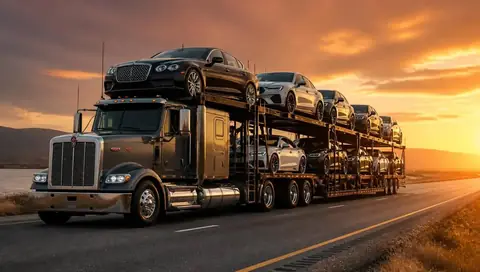
Snowbird toy transport
Motorcycle Transport
Touring bikes, cruisers, sport bikes and trikes.
Overview
How motorcycle transport works
Riders who spend winters south almost never want to ride 1,500 miles through November weather to get the bike there. Shipping the motorcycle and flying is the normal play, and it is one of the highest-volume seasonal items we arrange.
The main decisions are open versus enclosed, and whether the bike runs. Everything else follows from those two answers.
Enclosed transport
The default recommendation for most bikes. The motorcycle is chocked, strapped with soft ties at the frame or triple tree, and protected from weather and road debris. Chrome and paint arrive as they left.
Open transport
Less expensive and appropriate for a durable, well-used bike. It sees weather and road grime the same way it would if you rode it.
Quoting
What we need to quote your shipment
- Year, make and model
- Whether it runs and rolls, and whether it steers and brakes
- Modifications: apehangers, hard bags, fairings, sidecar, trike conversion
- Overall length, width at the bars and height
- Whether a crate or pallet is involved
Enterprise Auto Transport LLC is a licensed brokerage (USDOT #2273104, MC #774106). We arrange transportation with qualified motor carriers whose equipment and authority fit the shipment - we do not own trucks or employ drivers.
Before pickup
- Reduce fuel to about a quarter tank
- Disconnect or disable the alarm - nothing kills a driver's day faster
- Remove the windscreen if it is loose, plus the top case, GPS and any quick-release accessories
- Fold in or remove mirrors where possible
- Check tire pressure so the bike rolls and chocks properly
- Note existing scratches on the bill of lading and photograph both sides, the tank and the pipes
- Provide a key if the steering lock needs to be released
From experience
What commonly goes wrong
- Chains over the frame are wrong for a motorcycle. Soft ties over the bars or frame with a wheel chock is the standard.
- Aftermarket exhaust and fairings are the parts most often scuffed during loading. Point them out to the driver.
- Loose saddlebag contents shift and rub the paint from the inside.
Questions
Motorcycle Transport FAQs
Should I choose enclosed for a Harley touring bike?
Can you ship two bikes together?
Before pickup
Condition and repair responsibility
Tires, brakes and anything that rolls: the owner's responsibility
- Anything that rolls or tows on its own wheels - boats, RVs, campers, utility and enclosed trailers, equipment trailers - must be roadworthy before pickup. That means sound tires with tread and no dry rot, correct air pressure, working bearings and hubs, functioning brakes and lights, a good coupler, safety chains and a spare if one is available.
- Equipment that has been parked for a long season is the most common problem. Tires that look fine can be dry-rotted and years past their date code, and bearings that have not been greased will run hot. If your boat or trailer has been sitting, have the tires and bearings checked before transport.
- The customer is responsible for the cost of any repairs needed to make the unit safe to move - tires, wheels, bearings, brakes, lights, couplers or anything else that allows the unit to roll or operate.
- If a tire blows out, a bearing fails or the unit becomes disabled in transit, the customer is responsible for the cost of towing to the nearest service facility and for the parts and labor to repair it. Roadside service on the highway costs considerably more than doing the work in advance.
- Repairs made on the road can add days to the delivery window. Enterprise Auto Transport LLC is a licensed brokerage and is not responsible for the mechanical condition of the equipment, for the cost of repairs or towing, or for delays caused by them.
Get started
Request a quote for this shipment
Not sure what kind of hauler you need?
Don't worry. You don't have to know whether you need a power-only truck, flatbed, enclosed trailer, RV driver or specialized carrier. Just tell us what you're moving, its approximate size, where it's going and when you need it moved. We'll review the shipment and determine what type of transportation is appropriate.
Please note: Anything that rolls on its own wheels must be roadworthy before pickup. The customer is responsible for repairs - tires, bearings, brakes, lights - and for towing and repair costs if the unit becomes disabled in transit.
Ready to move your boat, RV or toys?
Equipment-specific quoting on dimensions, weight and trailer condition - with a coordinator who answers the phone.