

Vehicle weight guide
How Much Does Your Car Weigh?
Curb weights for every major car and SUV by year, make and model - and exactly why those pounds show up on your shipping quote.
Start here
Why weight matters in auto transport
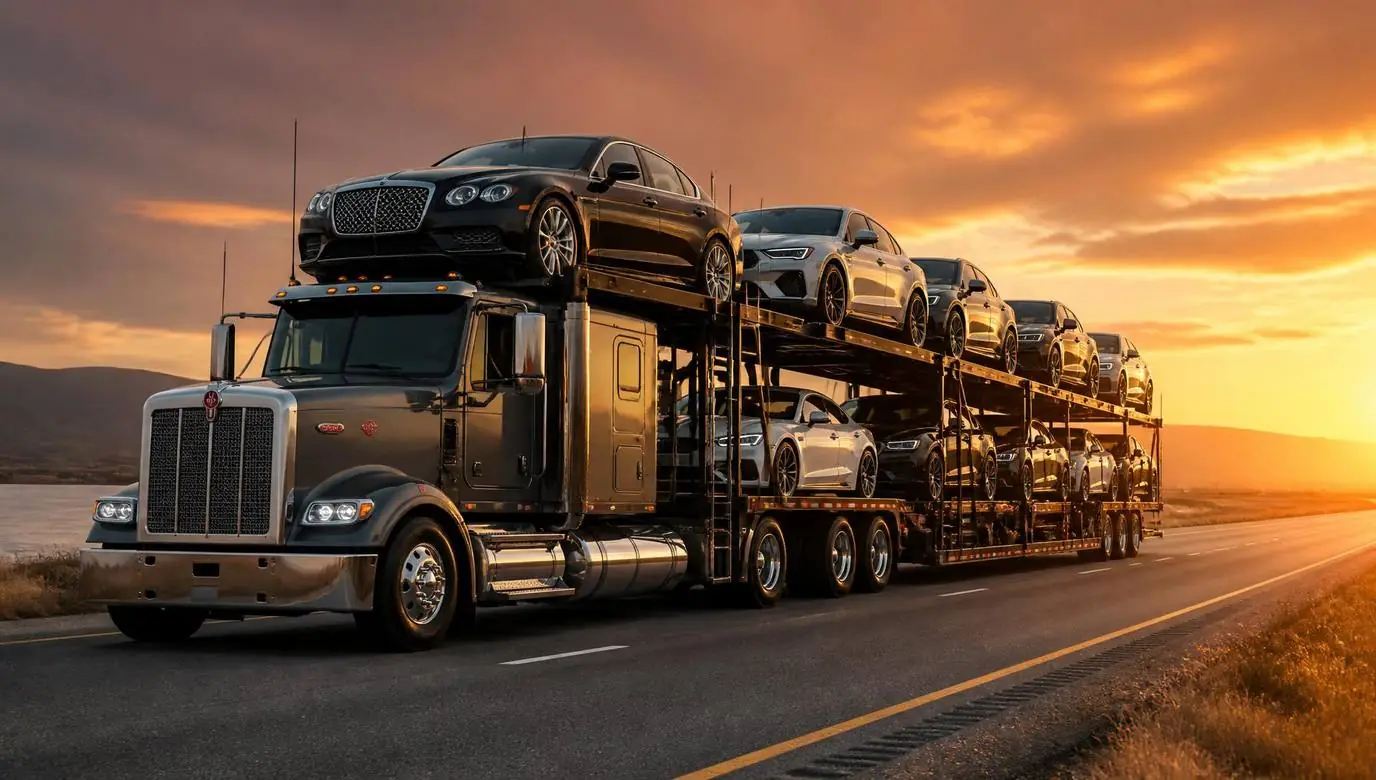
Every car hauler on the highway operates under one hard number: 80,000 pounds gross vehicle weight - tractor, trailer and cargo combined, set by federal law. The rig itself weighs 45,000 to 50,000 pounds empty. That leaves roughly 30,000 to 35,000 pounds of legal capacity for the vehicles on board, and every pound your car takes is a pound the driver cannot sell to someone else.
That is why a 2,900-pound Civic ships at the base rate on every lane, while a 5,800-pound Suburban costs $150 to $400 more on the same route. Load nine heavy SUVs and the trailer hits its weight ceiling before the deck is even full - the driver is carrying fewer vehicles than the trailer can physically hold, and the load has to pay for the empty slots.
Weight matters in three other ways too. Heavy vehicles stress winches and ramps when they do not run. Heavy, tall vehicles are limited to bottom-deck positions, which are the carrier's most valuable slots. And electric vehicles quietly broke the old assumptions - a compact-looking EV can outweigh a full-size sedan by a thousand pounds.
Base rate
Under roughly 3,200 lb. The cheapest vehicles to ship - light on the trailer, easy on the ramps, fits any slot.
Base rate
Roughly 3,200–4,300 lb. Most sedans and crossovers live here. Priced at the going lane rate with no weight adder.
+$50 to $150
Roughly 4,300–5,500 lb. Full-size sedans and midsize-to-large SUVs. Slight adder on weight-sensitive lanes.
+$150 to $400
Over roughly 5,500 lb. Full-size truck-based SUVs and large EVs. Weight and footprint both cost the carrier capacity.
Pricing
What weight actually costs on a quote
Real market ranges added on top of the base lane rate. Weight adders stack with size adders - a long and heavy vehicle pays for both.
| Weight class | Examples | Price impact | Why it costs more |
|---|---|---|---|
| Under 3,200 lb (compact cars) | Civic, Corolla, Mazda3, Mini | Base rate | Light cars let the carrier stay under the 80,000 lb gross vehicle weight limit with a full load. No penalty. |
| 3,200–4,300 lb (sedans & crossovers) | Camry, Accord, RAV4, CR-V | Base rate | The reference weight class. Every lane quote you see advertised assumes a vehicle in this range. |
| 4,300–5,500 lb (large SUVs) | Explorer, Grand Cherokee, Pilot | +$50 to $150 | A loaded 9-car hauler of heavy SUVs can push against the legal gross weight. The driver prices the lost flexibility. |
| 5,500+ lb (full-size SUVs & EVs) | Suburban, Expedition, Tahoe, Hummer EV | +$150 to $400 | Truck-based SUVs and battery-heavy EVs take up both the weight budget and a full deck slot. Some carriers cap how many they will take per load. |
| EV weight premium | Batteries add 800–1,500 lb vs gas equivalent | +$100 to $300 | A Model X weighs about as much as a Tahoe. Electric vehicles price by what they weigh, not by their footprint. |
| Inoperable heavyweight | Non-running vehicle over 5,000 lb | +$300 to $800 total | Winching three tons up a shallow ramp angle is slow, hard on equipment, and shrinks the carrier pool. |
Reference
Curb weights for every major car and SUV
Manufacturer curb weights for common trims, rounded to the nearest pound. Your exact number is on the sticker inside the driver's door jamb - trim, all-wheel drive and options can move it by several hundred pounds.
90 vehicles listed across 9 categories.
Subcompact cars
The lightest class on the road. These load anywhere, on any trailer, and are the cheapest vehicles to ship per mile.
| Years | Make & model | Body style | Curb weight | Shipping tier |
|---|---|---|---|---|
| 2016–2022 | Chevrolet Spark | Hatchback | 2,246 lb | Compact |
| 2017–2024 | Mitsubishi Mirage | Hatchback | 2,095 lb | Compact |
| 2018–2023 | Kia Rio | Sedan | 2,767 lb | Compact |
| 2018–2022 | Hyundai Accent | Sedan | 2,679 lb | Compact |
| 2020–2025 | Nissan Versa | Sedan | 2,599 lb | Compact |
| 2017–2020 | Toyota Yaris | Hatchback | 2,415 lb | Compact |
| 2015–2020 | Honda Fit | Hatchback | 2,550 lb | Compact |
| 2019–2024 | Mini Cooper Hardtop | Hatchback | 2,845 lb | Compact |
| 2015–2019 | Fiat 500 | Hatchback | 2,363 lb | Compact |
| 2016–2025 | Mazda MX-5 MiataLightest sports car in production | Convertible | 2,341 lb | Compact |
Compact cars
The highest-volume class we ship. Every one of these prices at the base lane rate with no weight adder.
| Years | Make & model | Body style | Curb weight | Shipping tier |
|---|---|---|---|---|
| 2020–2025 | Honda Civic | Sedan | 2,935 lb | Compact |
| 2020–2025 | Toyota Corolla | Sedan | 2,955 lb | Compact |
| 2019–2025 | Mazda Mazda3 | Sedan | 3,081 lb | Compact |
| 2021–2025 | Hyundai Elantra | Sedan | 2,897 lb | Compact |
| 2019–2024 | Kia Forte | Sedan | 2,903 lb | Compact |
| 2019–2025 | Volkswagen Jetta | Sedan | 2,895 lb | Compact |
| 2020–2025 | Nissan Sentra | Sedan | 3,065 lb | Compact |
| 2020–2024 | Subaru Impreza | Sedan | 3,042 lb | Compact |
| 2019–2024 | Volkswagen Golf GTI | Hatchback | 3,137 lb | Compact |
| 2023–2025 | Honda Civic Type R | Hatchback | 3,188 lb | Compact |
Midsize sedans
The reference class for every advertised shipping rate. A midsize sedan at base weight is what 'standard vehicle' means on a quote form.
| Years | Make & model | Body style | Curb weight | Shipping tier |
|---|---|---|---|---|
| 2020–2025 | Toyota Camry | Sedan | 3,480 lb | Standard |
| 2020–2025 | Honda Accord | Sedan | 3,439 lb | Standard |
| 2019–2025 | Nissan Altima | Sedan | 3,288 lb | Standard |
| 2020–2025 | Hyundai Sonata | Sedan | 3,391 lb | Standard |
| 2021–2025 | Kia K5 | Sedan | 3,379 lb | Standard |
| 2020–2025 | Subaru Legacy | Sedan | 3,593 lb | Standard |
| 2019–2025 | Chevrolet Malibu | Sedan | 3,269 lb | Standard |
| 2018–2021 | Mazda Mazda6 | Sedan | 3,437 lb | Standard |
| 2018–2022 | Volkswagen Passat | Sedan | 3,325 lb | Standard |
| 2020–2025 | Toyota Camry Hybrid | Sedan | 3,580 lb | Standard |
Full-size & luxury sedans
Bigger bodies, more content, more weight. Most still ship at or near base rate - weight only starts to matter at the top of this class.
| Years | Make & model | Body style | Curb weight | Shipping tier |
|---|---|---|---|---|
| 2019–2022 | Toyota Avalon | Sedan | 3,652 lb | Standard |
| 2019–2023 | Nissan Maxima | Sedan | 3,641 lb | Standard |
| 2019–2023 | Dodge ChargerV8 trims push past 4,400 lb | Sedan | 4,207 lb | Standard |
| 2019–2023 | Chrysler 300 | Sedan | 4,046 lb | Standard |
| 2020–2024 | BMW 5 Series | Sedan | 4,016 lb | Standard |
| 2020–2024 | Mercedes-Benz E-Class | Sedan | 3,990 lb | Standard |
| 2020–2024 | Audi A6 | Sedan | 4,199 lb | Standard |
| 2020–2025 | Lexus ES | Sedan | 3,650 lb | Standard |
| 2020–2024 | BMW 7 Series | Sedan | 4,578 lb | Large / heavy SUV |
| 2021–2024 | Mercedes-Benz S-Class | Sedan | 4,776 lb | Large / heavy SUV |
Sports & performance cars
Weight varies wildly in this class - a Miata is lighter than a subcompact, while a Hellcat outweighs a midsize SUV. Low ground clearance matters more than weight here.
| Years | Make & model | Body style | Curb weight | Shipping tier |
|---|---|---|---|---|
| 2019–2024 | Ford Mustang GT | Coupe | 3,839 lb | Standard |
| 2019–2024 | Chevrolet Camaro SS | Coupe | 3,835 lb | Standard |
| 2020–2025 | Chevrolet Corvette StingrayMid-engine, low clearance | Coupe | 3,366 lb | Standard |
| 2019–2023 | Dodge Challenger SRT Hellcat | Coupe | 4,429 lb | Large / heavy SUV |
| 2020–2024 | Porsche 911 Carrera | Coupe | 3,354 lb | Standard |
| 2023–2025 | Nissan Z | Coupe | 3,533 lb | Standard |
| 2020–2024 | Toyota GR Supra | Coupe | 3,400 lb | Standard |
| 2022–2025 | Subaru WRX | Sedan | 3,336 lb | Standard |
| 2021–2024 | BMW M4 | Coupe | 3,830 lb | Standard |
| 2024–2025 | Ford Mustang Dark Horse | Coupe | 4,009 lb | Standard |
Compact SUVs & crossovers
The best-selling class in America. Still light enough to ship at base rate on virtually every lane.
| Years | Make & model | Body style | Curb weight | Shipping tier |
|---|---|---|---|---|
| 2019–2025 | Toyota RAV4 | SUV | 3,495 lb | Standard |
| 2020–2025 | Honda CR-V | SUV | 3,550 lb | Standard |
| 2019–2025 | Mazda CX-5 | SUV | 3,694 lb | Standard |
| 2021–2025 | Nissan Rogue | SUV | 3,527 lb | Standard |
| 2022–2025 | Hyundai Tucson | SUV | 3,604 lb | Standard |
| 2023–2025 | Kia Sportage | SUV | 3,616 lb | Standard |
| 2019–2024 | Subaru Forester | SUV | 3,588 lb | Standard |
| 2019–2024 | Chevrolet Equinox | SUV | 3,407 lb | Standard |
| 2020–2024 | Ford Escape | SUV | 3,469 lb | Standard |
| 2019–2025 | Jeep Wrangler 2-Door | SUV | 4,106 lb | Standard |
Midsize & 3-row SUVs
Where weight starts to show up on a quote. Two-row midsizers stay near base; three-row and V8 trims drift into the large tier.
| Years | Make & model | Body style | Curb weight | Shipping tier |
|---|---|---|---|---|
| 2020–2025 | Toyota Highlander | 3-row SUV | 4,260 lb | Standard |
| 2023–2025 | Honda Pilot | 3-row SUV | 4,515 lb | Large / heavy SUV |
| 2020–2025 | Ford Explorer | 3-row SUV | 4,501 lb | Large / heavy SUV |
| 2021–2025 | Jeep Grand Cherokee | SUV | 4,444 lb | Large / heavy SUV |
| 2019–2025 | Jeep Wrangler 4-Door | SUV | 4,526 lb | Large / heavy SUV |
| 2020–2025 | Kia Telluride | 3-row SUV | 4,358 lb | Large / heavy SUV |
| 2020–2025 | Hyundai Palisade | 3-row SUV | 4,387 lb | Large / heavy SUV |
| 2019–2024 | Toyota 4RunnerBody-on-frame | SUV | 4,550 lb | Large / heavy SUV |
| 2019–2024 | Chevrolet Traverse | 3-row SUV | 4,436 lb | Large / heavy SUV |
| 2024–2025 | Mazda CX-90 | 3-row SUV | 4,891 lb | Large / heavy SUV |
Full-size & truck-based SUVs
The heaviest passenger vehicles on the road. These ride on pickup frames, take a full deck slot, and always carry a weight adder.
| Years | Make & model | Body style | Curb weight | Shipping tier |
|---|---|---|---|---|
| 2021–2025 | Chevrolet Tahoe | Full-size SUV | 5,632 lb | Heavyweight |
| 2021–2025 | Chevrolet SuburbanLongest SUV in production | Full-size SUV | 5,808 lb | Heavyweight |
| 2019–2024 | Ford Expedition | Full-size SUV | 5,623 lb | Heavyweight |
| 2021–2025 | GMC Yukon | Full-size SUV | 5,666 lb | Heavyweight |
| 2021–2025 | Cadillac Escalade | Full-size SUV | 5,816 lb | Heavyweight |
| 2023–2025 | Toyota Sequoia | Full-size SUV | 5,795 lb | Heavyweight |
| 2022–2024 | Jeep Wagoneer | Full-size SUV | 5,960 lb | Heavyweight |
| 2022–2024 | Jeep Grand WagoneerHeaviest gas SUV sold in the US | Full-size SUV | 6,378 lb | Heavyweight |
| 2019–2024 | Lincoln Navigator | Full-size SUV | 5,855 lb | Heavyweight |
| 2019–2024 | Nissan Armada | Full-size SUV | 5,791 lb | Heavyweight |
Electric cars & SUVs
Batteries add 800–1,500 lb over the gas equivalent. EVs price by the scale, not by their footprint - always quote by actual weight.
| Years | Make & model | Body style | Curb weight | Shipping tier |
|---|---|---|---|---|
| 2020–2025 | Tesla Model 3 | Sedan | 3,862 lb | Standard |
| 2020–2025 | Tesla Model Y | SUV | 4,398 lb | Large / heavy SUV |
| 2021–2025 | Tesla Model S | Sedan | 4,561 lb | Large / heavy SUV |
| 2021–2025 | Tesla Model X | SUV | 5,248 lb | Large / heavy SUV |
| 2021–2025 | Ford Mustang Mach-E | SUV | 4,656 lb | Large / heavy SUV |
| 2020–2023 | Chevrolet Bolt EV | Hatchback | 3,589 lb | Standard |
| 2022–2025 | Hyundai Ioniq 5 | SUV | 4,433 lb | Large / heavy SUV |
| 2022–2025 | Kia EV6 | SUV | 4,414 lb | Large / heavy SUV |
| 2022–2025 | Rivian R1SHeaviest SUV we commonly ship | SUV | 6,950 lb | Heavyweight |
| 2024–2025 | GMC Hummer EV SUVExceeds many open carriers' per-axle comfort limit | SUV | 8,640 lb | Heavyweight |
The EV factor
Electric vehicles changed the math
Before EVs, carriers could guess weight from body style. A compact SUV was about 3,500 pounds, full stop. A battery pack broke that rule - it adds 800 to 1,500 pounds with no change in footprint, so the vehicle looks like a base-rate crossover and weighs like a truck-based SUV.
The practical rule: quote every EV by its actual curb weight, not its size class. A Tesla Model Y at 4,400 lb prices like a Grand Cherokee. A Rivian R1S at nearly 7,000 lb prices like a dually pickup. And a GMC Hummer EV at 8,600 lb is beyond many open carriers entirely and often moves on specialty equipment.
One more EV note: carriers ask that the battery arrive at 30–80% charge, not full and not empty, for safe loading and unloading.
Your vehicle
Get a quote that accounts for weight
Our quote form asks for your year, make and model separately - and flags crew cabs, long beds, lifts and oversized tires - so the rate we negotiate with carriers is built on what your vehicle actually weighs, not a generic class guess.
Honest weight in, honest number out. That is how a quote holds from booking to delivery.
- Check the door jamb sticker for your exact curb weight
- EVs: quote by weight, not body style
- Tell us if it runs - inoperable fees scale with weight
- Remove cargo and accessories before weighing assumptions
FAQ
Vehicle weight questions
Does vehicle weight really change the shipping price?
Why do carriers care so much about weight?
How much more does it cost to ship a heavy SUV than a sedan?
Are electric cars heavier to ship?
Where do I find my vehicle's exact weight?
Does weight matter more than size?
Does a heavier vehicle cost more if it doesn't run?
What's the heaviest vehicle you ship on a standard open carrier?
Ready to ship your vehicle?
Tell us the year, make and model - we negotiate the rate with carriers who can actually carry the weight. Owner operated, licensed and bonded, BBB Accredited Business | A+ Rating.