
Enterprise Auto Transport is an owner-operated, federally licensed & bonded nationwide auto transport broker (USDOT #2273104 / MC #774106). All logistics are managed via our central dispatch at (239) 273-4649— this is our only phone number.

Open vs enclosed auto transport

Which carrier type actually protects your car?

Open carriers move 90% of shipped vehicles. Enclosed carriers protect the 10% that cannot be exposed to weather, debris, or low-insurance limits. Here is how to decide.

The short answer

Open transport is standard. Enclosed transport is protection.

Open car carrier

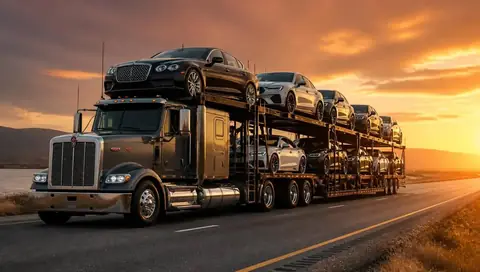
The two-level metal trailer you see on every highway. It is how dealerships receive new inventory and how most used cars move across the country. It is cheaper, faster to book, and available on almost every lane.

  • Lower price
  • More trucks and pickup windows
  • Perfect for daily drivers, trucks, and SUVs
  • Exposed to weather and road debris
  • Lower cargo coverage limits

Enclosed car hauler

A fully sealed trailer with hard walls and a roof. Vehicles are loaded with a hydraulic lift gate and secured with soft-tie wheel straps. It costs more, but it is the only option when exposure or clearance is a real concern.

  • Sealed from weather, dust, and debris
  • Lift-gate loading for low-clearance cars
  • $1M cargo coverage on our network
  • 40–60% higher cost
  • Fewer trucks, longer lead times in remote areas

Side-by-side

Open vs enclosed at a glance

FactorOpen carrierEnclosed hauler
Typical cost$$ — lower rate$$$ — 40–60% more
AvailabilityExcellent — most common trailer typeLimited — fewer trucks on the road
Weather / road debrisExposed to rain, dust, stones, bugsFully sealed walls and roof
Loading methodDrive-on rampsHydraulic lift gate
Ground clearanceFine for stock-height vehiclesIdeal for lowered or exotic cars
Insurance limit$250,000 cargo coverage$1,000,000 cargo coverage
Best forDaily drivers, trucks, family carsExotic, classic, restored, luxury, low-clearance

Real risks

What can actually go wrong on each trailer type

Open carrier risks

  • Stone chips and bug residue on the front end
  • UV exposure and water spots over long hauls
  • Lower cargo limits may not cover a total loss on a high-value car
  • Ramps can scrape very low front splitters

Enclosed carrier realities

  • Damage risk drops sharply because the car is sealed inside
  • Lift gates eliminate ramp scrape risk
  • Higher limits mean claims are less likely to be denied for coverage
  • Cost premium is real, and availability is tighter

When is it worth it?

Choose enclosed transport when any of these apply

Exotic & luxury

Ferrari, Lamborghini, Rolls-Royce, Bentley, McLaren — the paint and carbon alone justify sealed transport.

Classic & collector

Older vehicles often have irreplaceable paint, chrome, and trim. Enclosed keeps them out of the elements and away from flying debris.

Freshly restored or painted

New paint is soft for weeks. Road debris can chip it before you ever get to enjoy the finish.

Low clearance

Cars under roughly 5 inches of ground clearance can scrape on open-carrier ramps. Enclosed lift gates solve this.

Racing & track cars

Wings, splitters, and diffusers are expensive to replace and easy to damage on an open trailer.

High sentimental or resale value

Even if it is not exotic, if a single imperfection would cost you sleep or resale value, enclosed is the right call.

Our recommendation

If you are unsure, start with these rules

  • Daily drivers, trucks, and SUVs → open carrier
  • Vehicles worth under $75,000 → usually open
  • Vehicles worth over $100,000 → strongly consider enclosed
  • Fresh paint, classic, exotic, or lowered → enclosed
  • Long-distance move through winter weather → enclosed preferred
  • Tight schedule in a remote area → open may be your only fast option
Get an Open & Enclosed Quote
Enclosed car hauler with sealed walls and roof protecting a luxury vehicle inside

FAQ

Common questions about open and enclosed shipping

Will my car get damaged on an open carrier?
Most vehicles arrive clean and undamaged, but open transport exposes the car to weather, road debris, and the occasional stone chip. It is the same method dealerships use to deliver brand-new cars, so the risk is low for standard vehicles. If a single stone chip would ruin your week, choose enclosed.
Is enclosed transport worth the extra cost?
It depends on the vehicle. For a daily driver or a truck, the extra cost rarely makes sense. For anything collectible, freshly painted, very low to the ground, or worth more than the open carrier's cargo limit can comfortably cover, enclosed is the safer choice.
Does enclosed shipping mean the car is fully insured?
No policy covers 100% of every scenario without limits. Enclosed carriers typically carry $1,000,000 in cargo coverage, which is far more than open coverage, but every policy has a deductible and exclusions. Always request the certificate and read the terms.
Can I ship personal items inside the car?
No. Personal belongings are never covered by carrier cargo insurance, and the FMCSA limits what can be hauled inside a vehicle on an auto carrier. Empty the car before pickup, including toll transponders and parking passes.

Equipment explained

How will my vehicle be moved?

Open, enclosed, winch-equipped, specialized — what decides which one applies to your vehicle, and what we need to know to make that call.

Not sure whether you need an open carrier, an enclosed trailer or a winch-equipped truck? That's okay. Tell us what you're shipping and we'll determine the appropriate transportation method.

Cars, SUVs & pickups that run

A standard running vehicle usually moves on a multi-car open carrier, or enclosed when you want it protected from weather and road debris.

Transportation options that may apply

  • Open multi-car carrier — the common, lower-cost option
  • Enclosed trailer (soft-tie) when protection matters
  • Smaller open trailer for short lanes or tight-access addresses

Most vehicles ride on an open 7- to 10-car carrier, secured by wheel straps rather than chains over the suspension. Enclosed transport puts the vehicle inside a hard-sided trailer with a lift gate and soft-tie straps, which is what we recommend for anything low, freshly painted or hard to replace. Which one you get depends on your preference, the lane and what is running it that week.

What we'll ask you about

  • Year, make and model
  • Any modifications: lift, lowering, wide body, roof rack
  • Oversized tires or a camper shell
  • Whether it runs, rolls, steers and brakes
  • Both addresses and access
  • Your date range
Open vs enclosed, compared

General guide: how vehicles usually move

A starting point, not a guarantee of equipment. Your shipment is reviewed before anything is assigned.

General guide: how vehicles usually move
What you're movingCommon transport method
Standard running car or SUVOpen carrier / enclosed by request
Low-clearance or exotic carEnclosed with lift gate and soft ties
Classic or collector carEnclosed / premium enclosed
Non-running but rolls and steersWinch-equipped open or enclosed carrier
Seized, no wheels or no brakesSpecialized equipment / rollback
Lifted or dually pickupOpen carrier, position-dependent / specialized
MotorcycleEnclosed with chock and soft ties / open
Electric vehicleOpen or enclosed / winch if disabled
Multiple vehicles togetherOpen carrier / dedicated enclosed load
Address a 75-foot truck cannot reachNearby meeting point, door-to-door otherwise

Transportation equipment is determined based on the size, weight, condition, modifications, route and accessibility of your vehicle. The methods shown here are examples of equipment that may be used. Enterprise Auto Transport will review your shipment and work with an appropriate motor carrier to determine the best available transportation option.

Tires, brakes and anything that rolls: the owner's responsibility

  • Anything that rolls or tows on its own wheels — boats, RVs, campers, utility and enclosed trailers, equipment trailers — must be roadworthy before pickup. That means sound tires with tread and no dry rot, correct air pressure, working bearings and hubs, functioning brakes and lights, a good coupler, safety chains and a spare if one is available.
  • Equipment that has been parked for a long season is the most common problem. Tires that look fine can be dry-rotted and years past their date code, and bearings that have not been greased will run hot. If your boat or trailer has been sitting, have the tires and bearings checked before transport.
  • The customer is responsible for the cost of any repairs needed to make the unit safe to move — tires, wheels, bearings, brakes, lights, couplers or anything else that allows the unit to roll or operate.
  • If a tire blows out, a bearing fails or the unit becomes disabled in transit, the customer is responsible for the cost of towing to the nearest service facility and for the parts and labor to repair it. Roadside service on the highway costs considerably more than doing the work in advance.
  • Repairs made on the road can add days to the delivery window. Enterprise Auto Transport is a licensed broker and is not responsible for the mechanical condition of the equipment, for the cost of repairs or towing, or for delays caused by them.

Ready to Ship your car?

Open and enclosed semi-truck carriers, door-to-door delivery and a coordinator who answers the phone.